What Small Business Finance Really Needs
💜 Introduction: Two Different Worlds
In the world of finance, there are two completely different realities:
- Institutional finance – built for static reporting, governance, and asset protection.
- Entrepreneurial finance – built for cash flow, motion, survival, and growth.
At Actuarius, we work every day in the second world. And we’ve learned – sometimes painfully – that traditional finance professionals often don’t see what small businesses actually need.
🔹 The Corporate Lens vs. The Entrepreneurial Lens
- In big companies: Finance means protecting assets, preparing audits, and managing static snapshots. Success is measured in risk mitigation, compliance, and reporting cycles.
- In small businesses: Finance means knowing where the cash is today – and where it’s going tomorrow. Success is measured in motion, velocity, and decision-making agility.
🔹 Why the Disconnect Happens
Traditional CFOs and controllers are trained to:
- Trust complexity.
- Mistrust simplicity.
- Manage compliance, not cash flow.
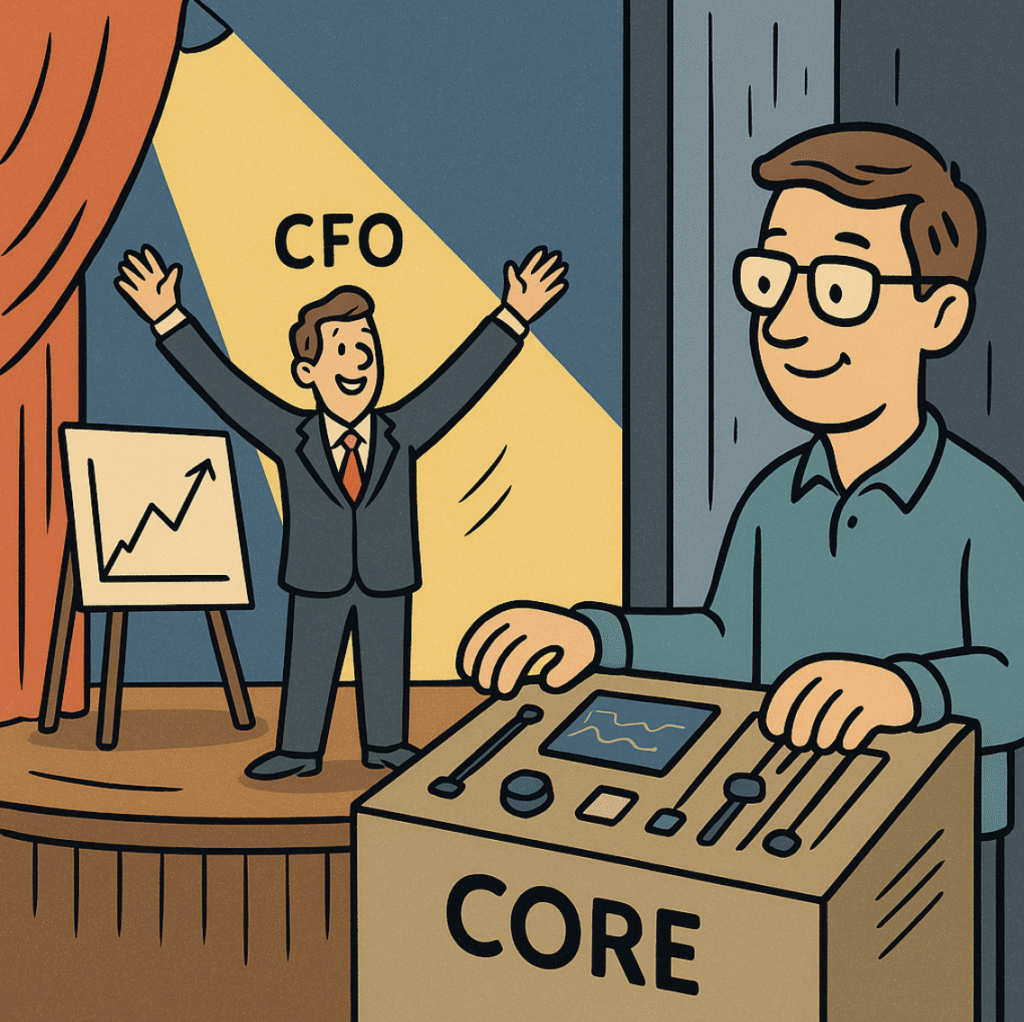
When they see a system like CORE – built for clarity, speed, and real-time decision-making – it doesn’t fit the mental model they were trained in.
They miss the opportunity because they weren’t taught to see motion.
🔹 What Small Businesses Actually Need
- Visibility into where the money came from, where it went, and what’s coming next.
- Clean operational data – not endless layers of financial abstraction.
- A system built to make real-world decisions – not boardroom presentations
Small businesses don’t need Sarbanes-Oxley controls. They need clarity at the kitchen table, the shop floor, and the client invoice.
🔹 Our Mission
At Actuarius, we don’t build systems for boardrooms. We build systems for the people actually carrying the weight – the business owners, the operators, and the families who risk it all every day.
CORE exists to solve their problems. Not because it’s simple. Because it’s right.
🚀 The Discovery of CORE
CORE didn’t come from an academic study. It didn’t come from theorizing about how accounting should work. It came from trying to solve real problems for real clients – and noticing something that didn’t fit the traditional models.
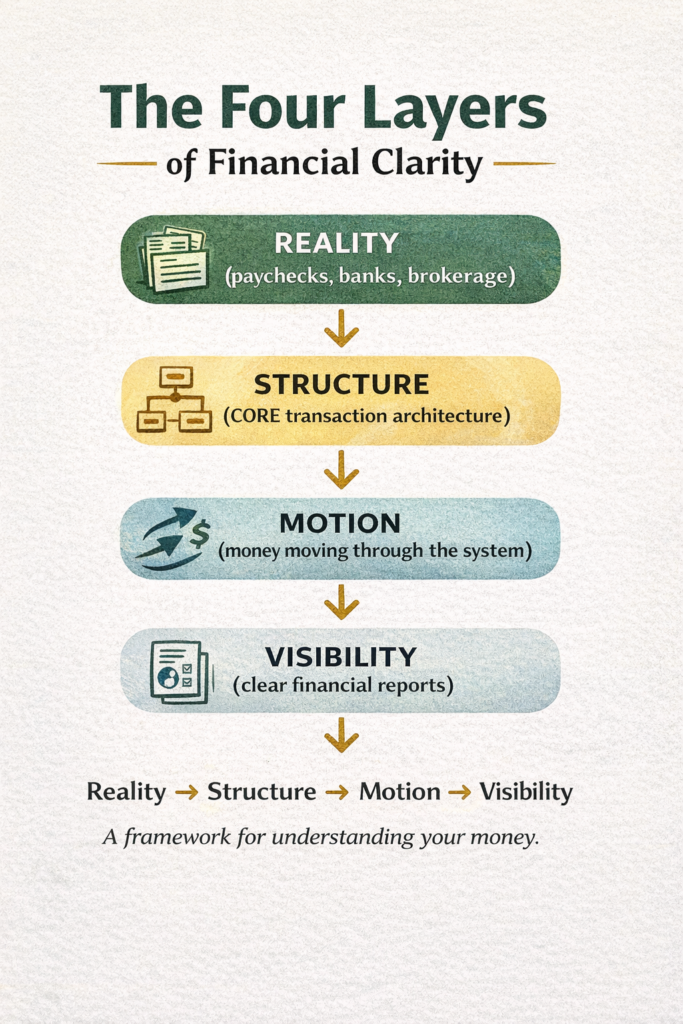
We needed real-time financial clarity. We needed to track money as it moved, not after it moved. We needed small businesses to see where they stood without needing an MBA to read their own reports.
And the existing systems couldn’t do it. Because they were built for static reporting, not dynamic visibility. So, we built a different structure. A structure based on motion, not snapshots. A structure that could show business owners the flow of money in real time – without complexity or abstraction.
It didn’t look fancy. It looked simple. Which is why, to many traditional CFOs and controllers, it didn’t look important.
👀 Almost Overlooked
To be honest, I almost missed it too. When I first discovered the structure that would become CORE, it didn’t feel revolutionary. It didn’t feel like I had created a better accounting system. It just felt like I had solved a workflow problem. It wasn’t until I used it – and kept using it – that the real implications started to appear. It made everything simpler, faster, clearer. It revealed motion where traditional systems only showed static snapshots.
Over time, I realized: This wasn’t just a better spreadsheet. This was a better foundation for accounting itself. But like Fleming’s petri dish, it didn’t announce itself with fireworks. You had to be willing to look again – and see what was really there.
💡 Why Experts Miss It
Traditional finance experts are trained to trust complexity. They’re trained to believe that if it’s simple, it must not be serious. When they see CORE, they don’t recognize it at first. Because it doesn’t match what they were taught to look for.
Just like the mold in Fleming’s dish didn’t match what scientists thought they were supposed to find.
The value isn’t in the complexity. The value is in seeing the obvious thing that works.
🛠️ What CORE Solves
- Small businesses don’t need Sarbanes-Oxley controls.
- They don’t need quarterly financials in a three-ring binder.
- They need:
- To know where the cash came from
- To know where it went
- To see what’s happening right now, not three months from now
CORE wasn’t built to impress auditors. It was built to give business owners real power over their numbers. And that’s why it works.
🚀 Conclusion: Seeing Motion
The future of small business finance isn’t static spreadsheets and quarterly reports. It’s living, breathing, visible motion.
And those who learn to see it – will win.